

The age-old question asked by overprotective aunts and nosy strangers: you’re pregnant and you drink coffee? Can you still allow yourself a morning espresso or an afternoon latte while expecting? My short answer is: yes, you can. I have checked the current state of knowledge, and below is a brief summary.
There is a great deal of research on caffeine and pregnancy, although many studies contradict one another and do not provide a clear-cut answer in every respect. Some point to specific risks, while at the same time noting that it is not certain whether those risks are directly caused by coffee itself. Nevertheless, most of them conclude that coffee can be consumed during pregnancy, although some moderation should be observed.
How does coffee affect a pregnant woman?
During pregnancy, metabolizing and eliminating caffeine takes about twice as long as usual, which means the fetus is exposed to certain amounts of it. However, studies have not shown any direct impact on fetal development or on the occurrence of any defects. On the other hand, it is generally accepted that EXCESSIVE coffee consumption may have a negative effect on fetal development. The exact mechanism is not entirely clear, but the most popular theory is that large amounts of caffeine increase catecholamine levels, which disrupts blood flow in the placenta and thus reduces the amount of nutrients the fetus receives.
Coffee, as most of you probably know, also flushes out magnesium and calcium, which is undesirable for anyone, and even more so for pregnant women, who often already have reduced levels of these minerals (especially calcium, which is used for the development of the baby’s bones). Coffee may also reduce iron levels and thereby contribute to anemia.
It is also worth mentioning that during pregnancy, metabolizing and eliminating caffeine takes twice as long (up to 12 hours), so if until now your last coffee at 5:00 PM did not cause any trouble falling asleep, during pregnancy such problems may already begin to appear.
Do you have to give up coffee during pregnancy? Not necessarily!
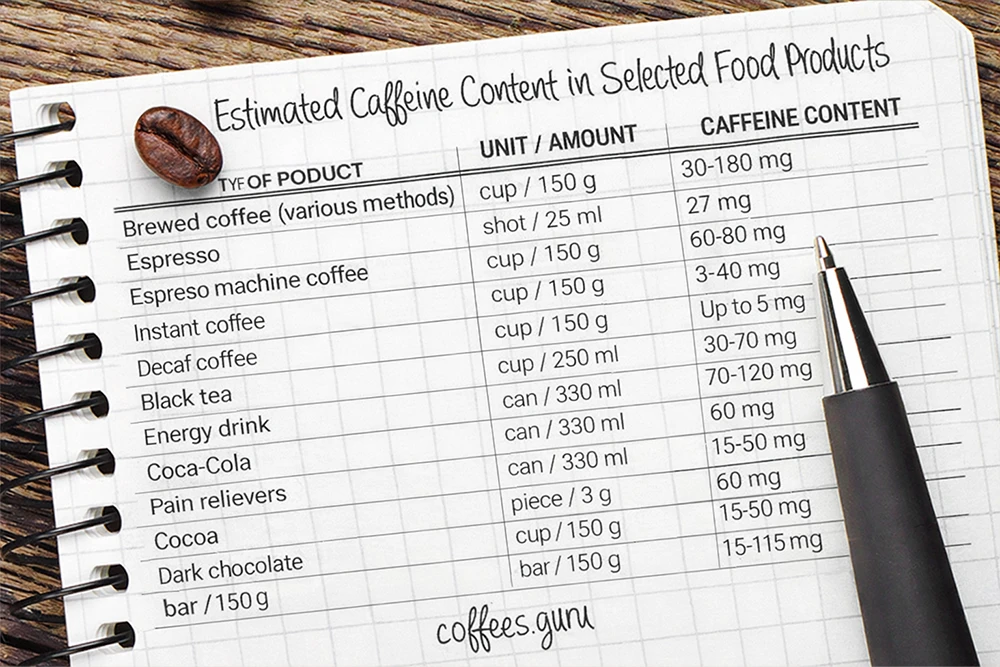
The official position of the World Health Organization is that pregnant women should not exceed a daily intake of 300 mg of caffeine.
This amount should not cause any negative effects. It is worth remembering, however, that caffeine is also found in tea, cola, energy drinks, and cocoa (which, on the other hand, provides quite a lot of magnesium). And of course, not all coffee is equal. A small espresso contains about 30 mg of caffeine, but 200 ml of traditionally brewed coffee can contain even more than 200 mg, which uses up around one third of the daily limit. A can of Coca-Cola contains 40 mg of caffeine, while a bar of dark chocolate may contain as much as 120 mg.